

A History of the Shiojiri Room
1937
Helen Amos, a Mishawaka teacher, met a Japanese man from Shiojiri, Japan on a train while visiting the island of Java in Indonesia. The man mentioned this meeting to his friend, Hiro Takasuna. Takasuna wrote to Amos, beginning a four-year letter exchange that ended with the start of World War II.
1964
Students from Battell Elementary sent artwork to Nishi Primary School in Shiojiri which began a cultural exchange program between the cities.
1972
Shiojiri, Japan and Mishawaka, Indiana became sister cities.
1987
Shiojiri Niwa Garden, located at 1000 East Mishawaka Avenue, was dedicated in honor of the sister-city friendship.
1998
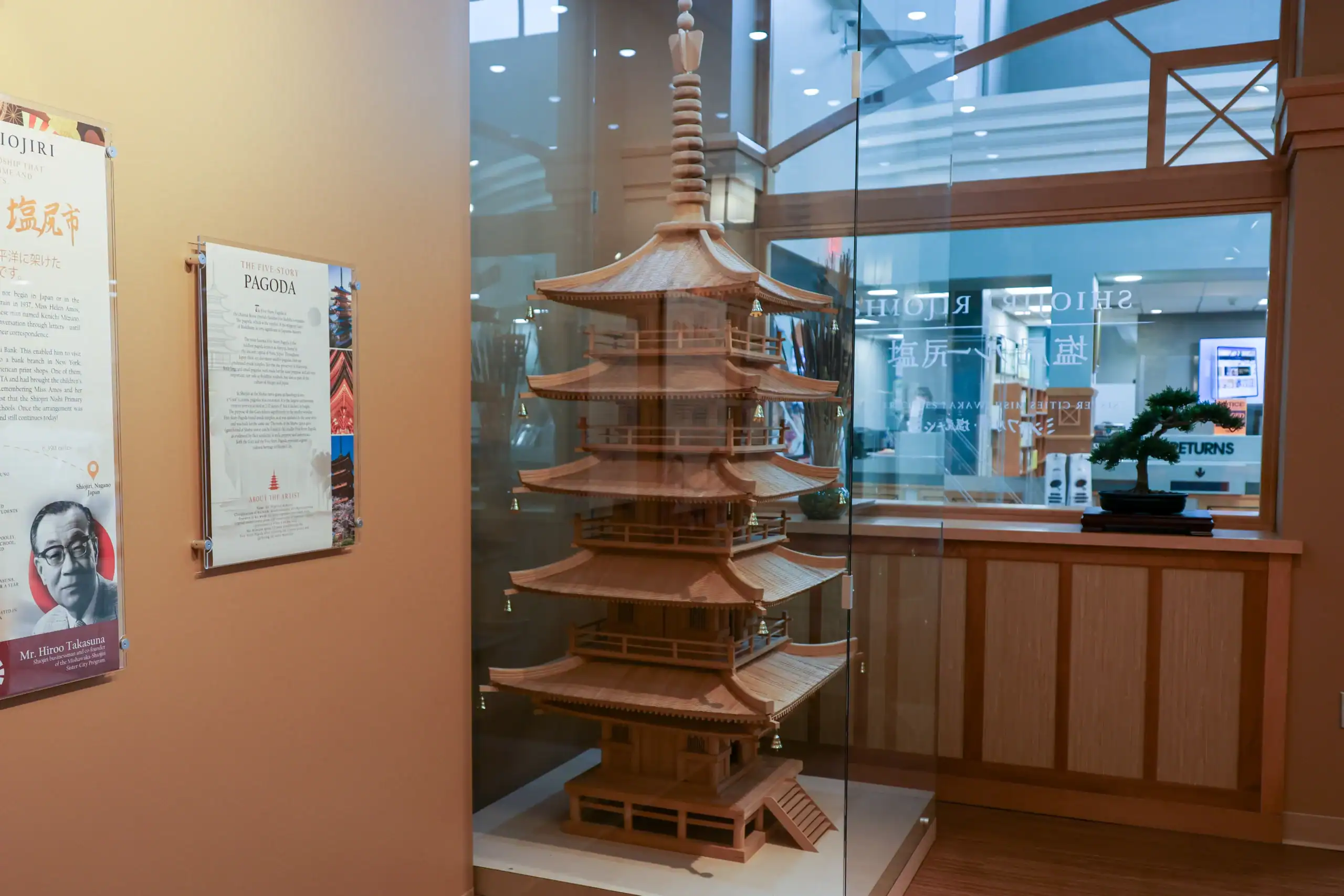
A five-story pagoda created by artist Shigehisa Komatsu was put on display at the Mishawaka-Penn-Harris Public Library.
2003
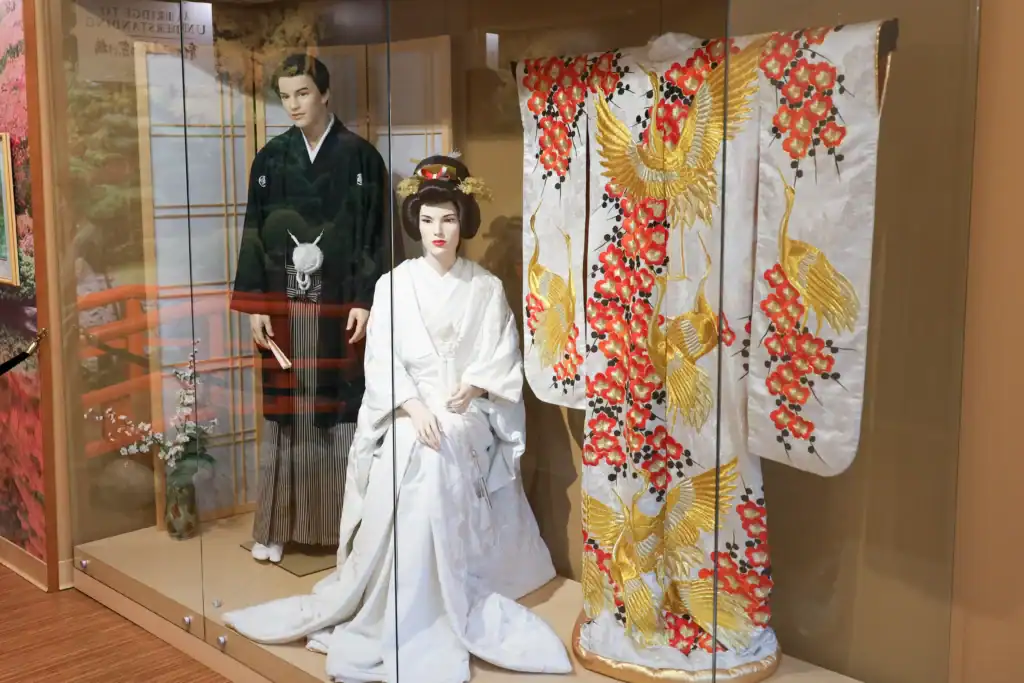
An additional display was added at the Mishawaka-Penn-Harris Public Library depicting mannequins wearing traditional Japanese wedding garb. Due to space restrictions, the display was not able to be placed next to the pagoda.
2017
The Shiojiri Room was completed at the Mishawaka-Penn-Harris Public Library in March, combining separate Shiojiri and Japanese displays into one space.
2022
Shiojiri and Mishawaka celebrated 50 years as sister cities. On April 28, Toshiyuki Oguchi, the Mayor of Shiojiri and his assistant, Momose Toshihiko, visited Mishawaka and included a stop to see the Shiojiri Room for the first time.
Shiojiri Room Highlights
- A model of a five-story pagoda created by artist Shigehisa Komatsu is displayed in one of two large glass cases. The pagoda took 2 ½ years to craft out of wood.
- In the other large glass case, two mannequins wear traditional Japanese wedding garb modeled after one of the many people who have flown between Mishawaka and Shiojiri.
- A placard shows photos and tells of the wedding of Ritsuko Osaki, a woman who graduated from Mishawaka High School in 1985 as an exchange student.
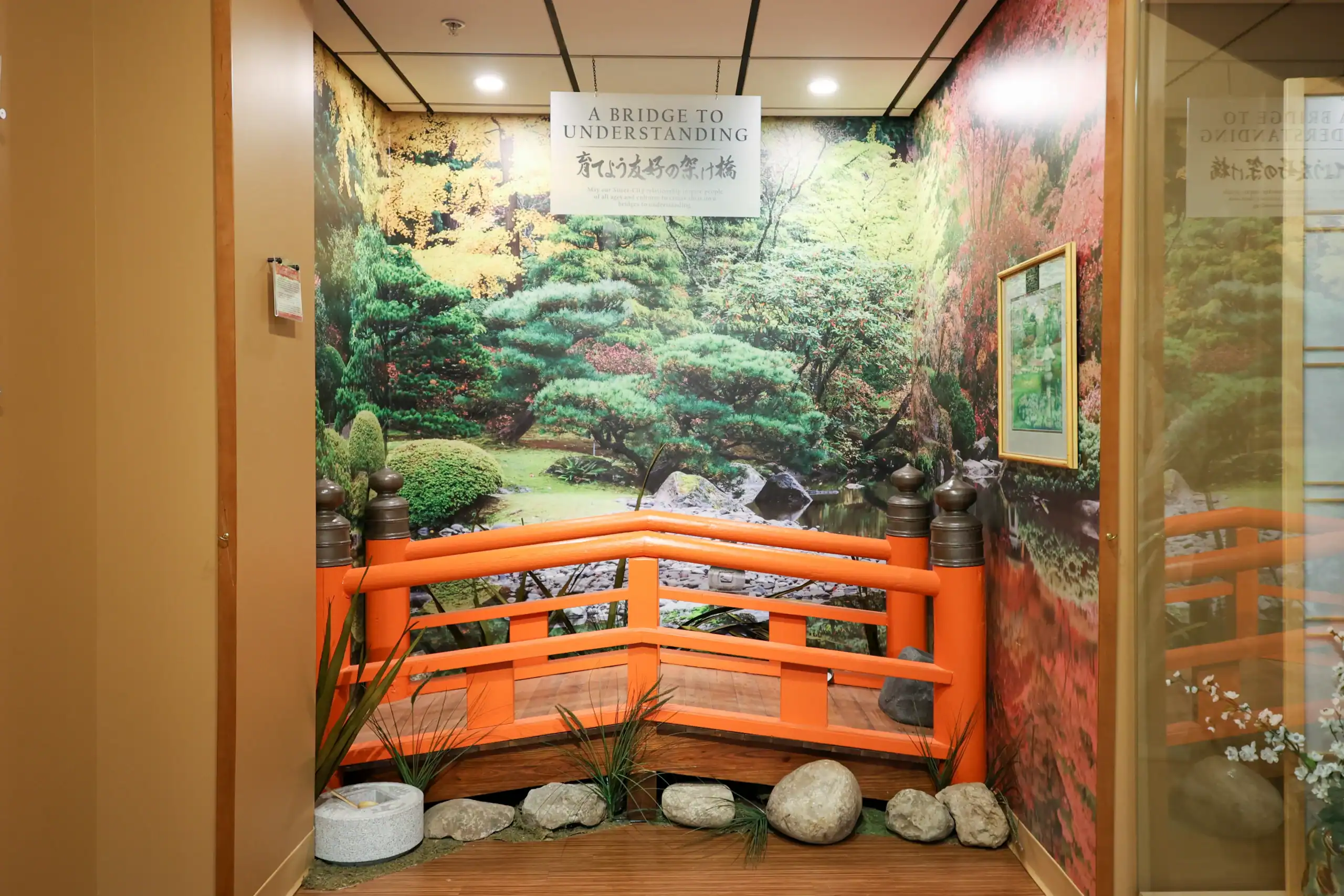
- Under the sign “A bridge to understanding,” a local craftsman built a footbridge to mimic the bridge at Shiojiri Niwa, the 1.3-acre Japanese garden next to Mishawaka’s Crawford Park.
- The bridge is painted orange because many traditional footbridges in Japan are also orange.
- A mural-sized photo covers one wall depicting the main street running through Narai-juku, a historic town inside Shiojiri where several Mishawaka residents have walked on their visits to the city.
- A display shows the book Sadako and the Thousand Paper Cranes by Eleanor Coerr. Around it is a string of brightly-colored paper cranes, or birds, that were gifted to Helen Amos.
Indiana Passport Program
- MPHPL is one of over 150 libraries that are part of the Indiana Library Passport program. Our inclusion in the program is due to the unique/historical significance of our Heritage and Shiojiri rooms.